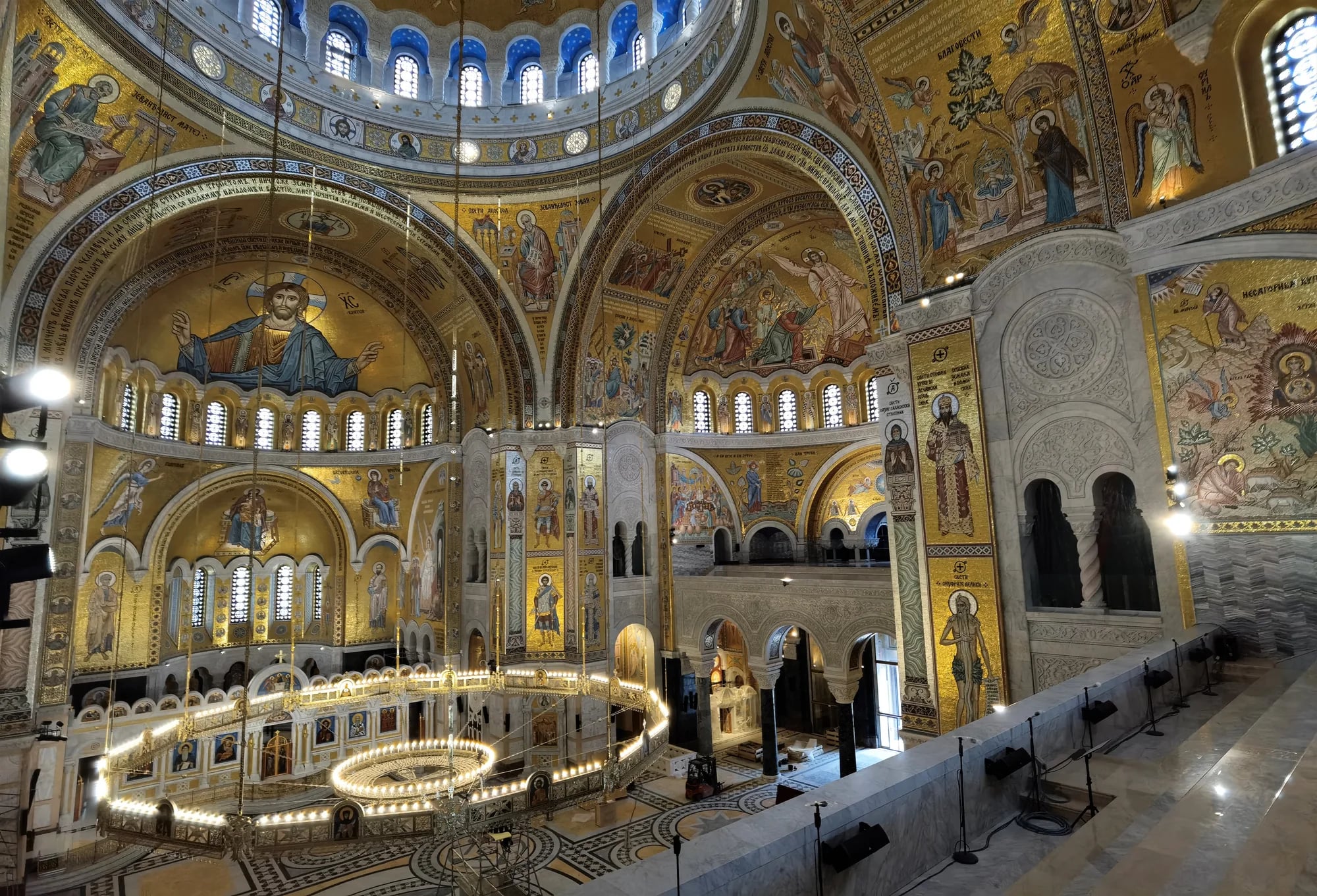
THE STORY BEHIND THE EVENING
A story wecarry together.
A prince who became a monk. A legacy of learning. A melody that crosses borders. Discover the people and traditions behind the Svetosavski Ball.
Begin the storyBEFORE THE FIRST DANCE
Every celebration has a story.
The name Svetosavski means ‘of Saint Sava’. Behind it lies a story that reaches from medieval monasteries to school celebrations and the ballrooms of Vienna. Follow its threads: faith, a love of learning, and the joy of coming together.
01 / SAINT SAVA
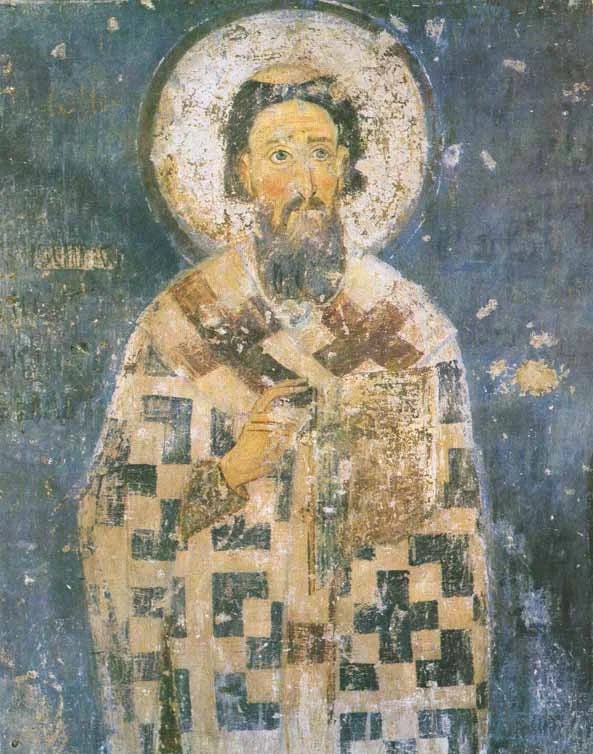
A different kind of inheritance.
Born around 1175 as Rastko Nemanjić, the youngest son of the Serbian ruler Stefan Nemanja, Sava chose monastic life on Mount Athos. The prince became a monk; his influence would reach far beyond a court.
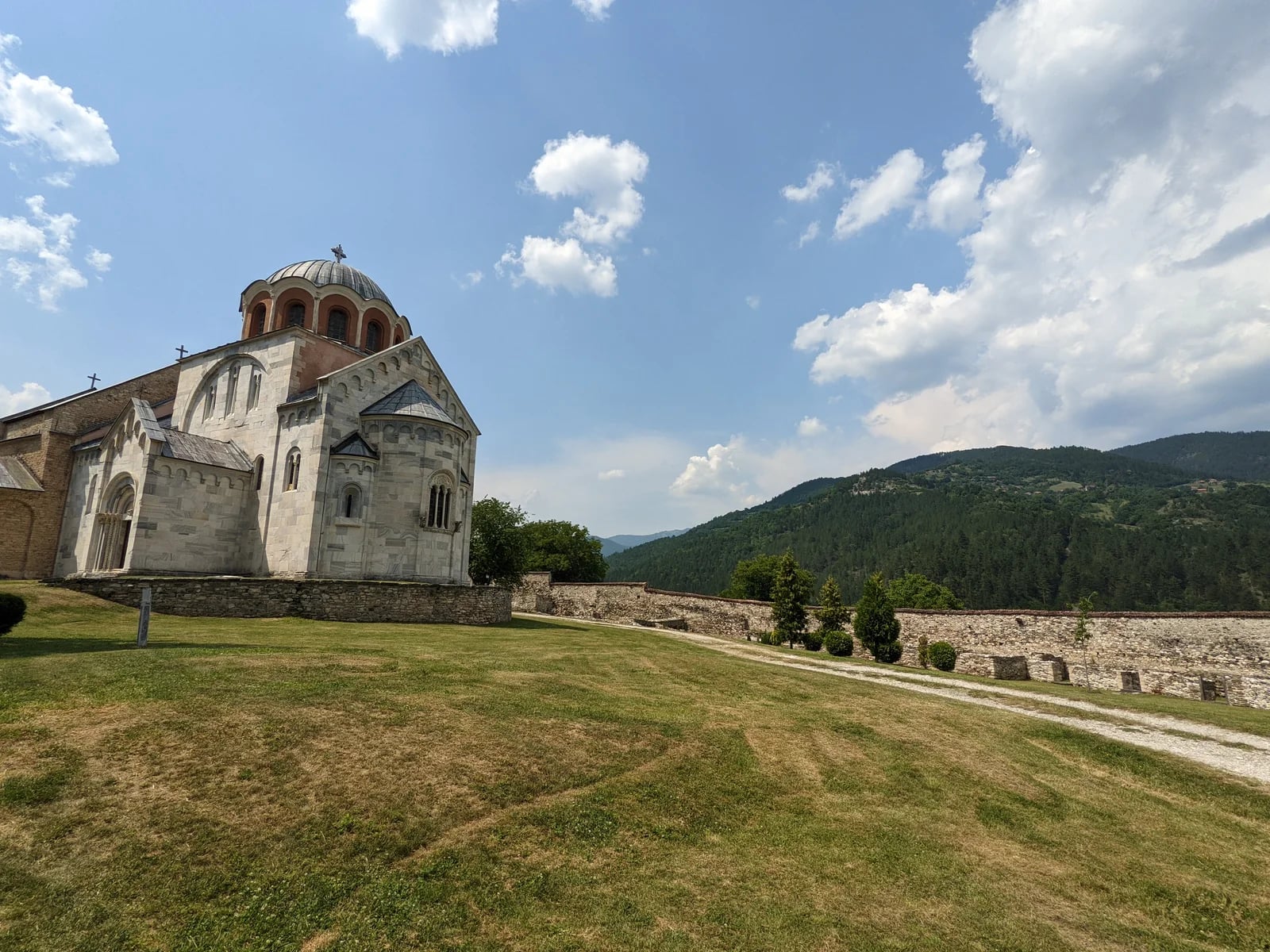
In 1198, Sava and his father, now the monk Simeon, established the Serbian monastery of Hilandar on the site of an older monastery. Its community became an important centre of Serbian literature, art, and spiritual life.
In 1219, Sava became the first archbishop of the independent Serbian Church. Remembered as a writer, lawmaker, diplomat, and spiritual teacher, he helped shape the institutions and ideas through which Serbian culture would develop.
02 / A LIVING LEGACY
A name passed from one generation to the next.
For many families, the story is encountered in a classroom. Written evidence of a school celebration reaches back to 1734–35 in Sremski Karlovci. In 1840, Saint Sava was formally recognized as the patron of schools in the Principality of Serbia.
National Museum of Serbia- c. 1175
Rastko is born
A young member of the Nemanjić dynasty, later known as Sava.
- 1198
Hilandar
Sava and Simeon establish a lasting spiritual and cultural home.
- 1219
The first archbishop
Sava leads the independent Serbian Church.
Savindan, Saint Sava’s feast day, is celebrated on January 27. Our Calgary ball has its own event date: a gathering inspired by this wider tradition of remembrance and community.
03 / THE BALL
When cultures meet on the dance floor.
The Svetosavski Ball in Vienna brings Serbian music into the world of Viennese ballroom culture. A waltz and a traditional dance can share the same evening.
That meeting offers a way to think about tradition: carried by people, renewed through participation, and shared with friends who are encountering it for the first time.
- 1840
A celebration of learning
Saint Sava was formally recognized as the patron of Serbian schools. Celebrations in his honour became an enduring expression of education, faith, and cultural life.
National Museum of Serbia - 1846
Serbian music in Vienna
The Svetosavski Ball in Vienna traces its roots to an 1846 performance of Johann Strauss II’s Serbian Quadrille, written at the request of Prince Miloš Obrenović.
Vienna ball history - 1998
A tradition renewed
The Serbian community revived the ball in Vienna as Svetosavski Bal, bringing Viennese ballroom culture and Serbian music and dance together again.
Serbian Centre Vienna
04 / MUSIC & KOLO
The circle is part of the story.
In kolo, dancers link hands in a chain, often moving in a circular line. Individual steps become a shared rhythm. Recognized by UNESCO in 2017, this collective folk dance is a living part of Serbia’s cultural heritage.
Kolo is learned through participation: at family gatherings, community celebrations, and in folklore groups. A step is watched, tried, and passed on. That is the beautiful possibility of a dance floor: something inherited can become something you experience for yourself.
The story of kolo · UNESCO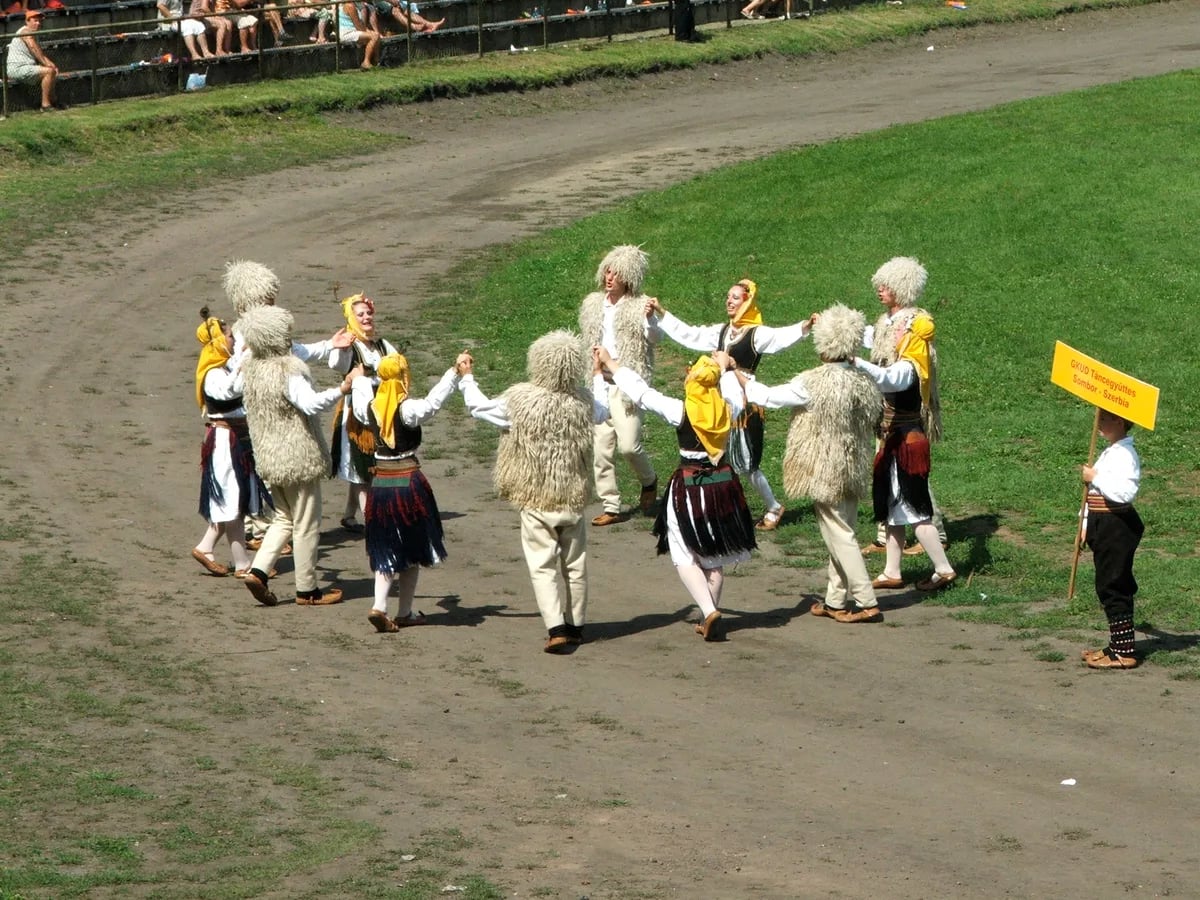
THE NEXT CHAPTER / CALGARY
Come for the evening. Be part of the story.
Our gathering brings this spirit to Calgary through live music, conversation, and celebration. Bring your memories, your curiosity, and the people you love spending an evening with. We look forward to sharing it with you.
Buy tickets · Calgary Petroleum ClubFollow the story further.
Explore the museums, cultural institutions, and communities behind this introduction.
- 01Serbian Academy of Sciences and Arts
- 02Takmičari generacije · Republic of Serbia
- 03Hilandar Monastery
- 04National Museum of Serbia
- 05Svetosavski Ball · Vienna
- 06Serbian Centre · Vienna
- 07UNESCO · Intangible Cultural Heritage
- 08Serbia’s National Register of Intangible Cultural Heritage
Image credits
- P.Cikovac · Wikimedia Commons · CC BY-SA 4.0
- 01 · Mileševa · Wikimedia Commons · Public domain
- 02 · Tracychapmanfan5 · Wikimedia Commons · CC BY-SA 4.0
- 03 · Björn Láczay · Wikimedia Commons · CC BY 2.0
Images resized, converted to WebP, and cropped for this layout.